

From Loyalty Points to Digital Tokens: Could Blockchain Change Beauty Rewards Programs?

reviewing loyalty program dataLoyalty programs remain a major part of how beauty retailers encourage repeat purchases and maintain customer relationships. Familiar systems usually award points that shoppers can exchange for samples, discounts, products, or special experiences. Sephora, for example, continues to operate Beauty Insider as a conventional points-based program, while retailers such as Rustan’s use similar purchase-and-reward structures.

Beauty companies are also experimenting with newer forms of digital engagement. During 2026, these experiments have included crypto rewards, blockchain-based membership systems, and tokenized incentives. The changes do not suggest that cryptocurrency is replacing ordinary beauty payments. Instead, brands are testing whether blockchain can add flexibility or new experiences to existing rewards programs.

Why Traditional Points Still Work

Conventional loyalty points have one major advantage: familiarity. Customers make a purchase, earn a predictable number of points, and redeem them within the retailer’s system.

Sephora states that Beauty Insider members generally earn one point for every U.S. or Canadian dollar spent on eligible merchandise. Rewards range from product samples to larger benefits and experiences. The system remains controlled by the retailer, and its rewards generally cannot be transferred or sold.

This closed structure can make programs simple to manage. It also allows brands to connect rewards directly with purchases, customer tiers, promotions, and exclusive events.

What Changes When Rewards Become Tokens?

Blockchain-based systems can treat a reward as a digital token recorded on a distributed ledger. Depending on how the program is designed, tokens could potentially be transferred between wallets, used across participating businesses, or connected with digital memberships.

Some beauty-related experiments are already exploring this approach. In June 2026, ESCO Cosmetic announced a blockchain-related strategy involving NFT membership and rewards for participating consumers. Meanwhile, Lolli continues to provide Bitcoin cashback opportunities across a large beauty-shopping category, showing another way digital assets can sit beside ordinary purchases rather than replacing them.

Portability Comes With Extra Complexity

Greater portability could make rewards more useful. A blockchain record may also make the movement and issuance of certain tokens easier to verify. Brands could connect these assets with memberships, events, collectibles, or partner benefits.

Yet those features introduce additional steps. Consumers may need to understand wallets, addresses, passwords, token transfers, and changing asset values. Federal Trade Commission consumer guidance notes that cryptocurrency is normally stored in digital wallets and warns that lost credentials, incorrect transfers, compromised wallets, or failed platforms can make funds difficult to recover.

Volatility creates another distinction. Traditional store points usually have a redemption value determined by the program. Cryptocurrency rewards can rise or fall with the market. The Federal Trade Commission notes that cryptocurrency values can change rapidly, making crypto cashback fundamentally different from earning a fixed retail discount.

Replacement or an Extra Layer?

Blockchain may therefore be more useful as an optional layer than as a complete replacement for beauty loyalty points. Shoppers who want a simple discount may prefer familiar rewards, while digitally experienced customers could value transferable tokens, crypto cashback, or wallet-linked memberships.

The direction visible in 2026 is experimentation rather than wholesale change. Beauty retailers can keep the simplicity of conventional points while testing blockchain for selected experiences. The long-term outcome will depend less on the novelty of tokens and more on whether they make rewards easier, more valuable, and understandable for everyday shoppers.

From Bitcoin Checkout to Blockchain Loyalty: How Beauty Brands Are Actually Using Crypto

Modern Crypto Beauty CheckoutCryptocurrency has moved into parts of the beauty industry, although adoption remains selective rather than mainstream. Beauty retailers and brands have tested everything from Bitcoin checkout to crypto rewards and blockchain-backed ingredient tracking. Lolli, for example, has worked with major beauty retailers including Sephora and Ulta Beauty to connect ordinary purchases with Bitcoin rewards.
For shoppers, crypto beauty payments can now mean several different things. A customer might pay directly from a digital wallet, earn Bitcoin after purchasing cosmetics with a conventional card, or encounter blockchain technology behind the scenes when checking where ingredients originated. These uses vary considerably in maturity, making it useful to separate what is already practical from what remains experimental.

1. Paying for Beauty Products With Cryptocurrency

Direct payment is the simplest application. Instead of using a credit card or bank account, a shopper transfers cryptocurrency through a supported payment processor. The processor can handle much of the technical work, reducing the need for a retailer to build its own crypto infrastructure.

Lush provides a notable example. BitPay currently lists Lush UK as accepting cryptocurrencies including Bitcoin, Ether and USDC through its checkout system. The arrangement lets customers select a supported digital currency and pay from a compatible wallet. Availability can differ between markets, however. Lush Philippines, for example, currently lists cards, Maya, GCash and cash on delivery among its payment methods rather than cryptocurrency.

2. Earning Bitcoin Without Paying in Bitcoin

Crypto rewards may offer an easier route into digital assets because shoppers do not have to change how they pay. Lolli lets customers earn cash or Bitcoin rewards when shopping with participating retailers, and its current platform says it works with more than 25,000 stores.

Beauty has been part of that model for several years. Lolli announced a Sephora partnership in 2022, while another company announcement listed Ulta among retailers available through its Card Boost program. The system allowed shoppers to link conventional payment cards and receive Bitcoin rewards after eligible purchases. Lolli’s current beauty marketplace continues to include numerous skincare, cosmetics and wellness merchants.

This model resembles familiar cashback programs more than a radical redesign of retail. That familiarity may be useful because consumers can gain exposure to Bitcoin without managing cryptocurrency during checkout.

3. Turning Tokens Into Customer Experiences

Blockchain-based loyalty can go further than cashback. Tokens and digital collectibles can function as access passes for exclusive products, communities or experiences.

L’Oréal has explored this approach through several brands. At Viva Technology 2022, the company highlighted Web3 initiatives including YSL Beauté’s release of 10,000 Golden Block NFTs, which were designed to unlock digital experiences and other utilities. NYX Professional Makeup and Mugler also featured in the group’s broader experiments with on-chain beauty.

These programs remain less common than standard points schemes. Ulta Beauty, for comparison, currently emphasizes a conventional loyalty model where its more than 46 million members earn points on purchases and exchange them for discounts and benefits.

4. Using Blockchain to Trace What Goes Into a Product

Some of the most practical blockchain applications are almost invisible at checkout. Instead, distributed records can help businesses document where ingredients came from and provide evidence behind sourcing claims.

Aveda says it uses blockchain technology to trace ingredients through a secure digital system, with the aim of supporting quality and responsible-sourcing verification. Lush also reports that one of its frankincense-oil suppliers uses a blockchain-enabled traceability application.

Beauty retailer Cult Beauty has also worked with Provenance on technology designed to provide evidence for product claims. Research published in Sustainability in 2024, however, noted that successfully scaled blockchain traceability systems remain relatively rare, particularly in complex industries such as fragrance.

5. What Is Still Holding Adoption Back?

Crypto in beauty still faces practical limits. Cryptocurrency values can fluctuate, payment availability varies by country, and customers must understand wallets and digital assets. Retailers also have to consider regulation, accounting, security and whether enough shoppers actually want another payment or rewards option.

The strongest near-term uses may therefore be those that require the least behavioral change. Bitcoin cashback can sit behind a normal card purchase, while blockchain traceability can operate without customers owning cryptocurrency at all. Direct crypto checkout and token-based loyalty are likely to remain more specialized until they offer shoppers a clear advantage over familiar alternatives.

Beauty brands are unlikely to abandon conventional cards, loyalty points or supply-chain databases anytime soon. Instead, crypto appears to be developing as an additional layer, useful where it makes payments easier, rewards more distinctive or sourcing claims easier to verify.

How Blockchain Loyalty Programs Are Influencing Beauty Brand Customer Retention

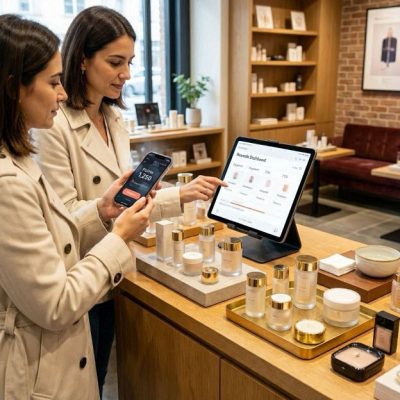
 beauty consumers interacting with a blockchain-powered loyalty appAccenture research has found that consumers increasingly value transparency and personalized experiences when engaging with brands. This trend has encouraged beauty companies to explore blockchain-powered loyalty systems, including emerging models built around digital beauty rewards. As competition intensifies across skincare, cosmetics, and wellness markets, brands are seeking new ways to strengthen customer relationships and encourage repeat purchases.

The Cause: Growing Demand for Transparency and Ownership

Traditional loyalty programs often operate within closed systems where points can expire, be difficult to track, or have limited redemption options. Blockchain technology addresses some of these challenges by creating transparent and verifiable records of customer rewards. Data from Deloitte indicates that blockchain applications can improve trust by providing secure and auditable transaction histories.

This transparency gives customers greater confidence in how rewards are earned and redeemed. Some beauty brands are also experimenting with tokenized incentives that allow members to access exclusive products, events, or community benefits.

The Effect: More Flexible and Personalized Engagement

Blockchain-based loyalty programs can enable transferable rewards, allowing users to exchange or utilize benefits across participating platforms. Experts at IBM note that blockchain networks can support more efficient data sharing while maintaining security and privacy controls.

As a result, beauty companies can create highly personalized customer experiences. Purchase history, product preferences, and engagement data can be used to deliver tailored offers while maintaining transparent records. These digital incentives may encourage stronger long-term engagement compared with traditional point systems.

Will Blockchain Loyalty Become Mainstream?

Adoption remains at an early stage. Challenges such as regulatory compliance, technical complexity, and consumer education continue to affect implementation. However, research from Gartner suggests that organizations across multiple industries are steadily exploring blockchain applications beyond cryptocurrency.

For beauty brands, the potential benefits include improved customer trust, enhanced reward flexibility, and deeper personalization. Whether blockchain-based loyalty systems become mainstream will depend on their ability to deliver clear value while remaining simple and accessible for everyday consumers. As digital engagement continues to evolve, blockchain-powered rewards may become an increasingly important part of customer retention strategies within the beauty sector.